Día de los Muertos is not, as Hollywood occasionally suggests, the Mexican version of Halloween. It's its own thing — older, quieter, and a lot more about love than about fear. On November 1 and 2 every year, families across Mexico build altars to their dead, lay marigold paths to guide spirits home, and sit with photos of grandparents and children and old friends while pan de muerto warms in the oven and copal incense fills the air. In a small town like San Pancho, it's not a tourist show. It's a community ritual you've been invited to witness — which makes it one of the most rewarding times of year to stay with us.
When It Happens
The dates are fixed: November 1 is Día de los Inocentes (or Día de los Angelitos), dedicated to children who have died, and November 2 is Día de los Muertos proper, dedicated to adults. In practice, San Pancho's altar-building, workshops, and parade-style events stretch from roughly October 28 through November 2, with the heaviest activity on November 1 and 2 themselves.
If you're planning a trip around the holiday, fly in by October 30 so you can catch the lead-up, and stay through at least November 2. Three to four nights is the sweet spot. Our team usually starts seeing serious holiday-week bookings come in by mid-summer, so the earlier you lock in dates, the better the selection.
The Altars (Ofrendas)
The centerpiece of Día de los Muertos is the ofrenda — a multi-tiered altar built in homes, businesses, and public plazas to honor the dead. They are intensely personal. A grandmother's altar might hold her favorite tequila, a stack of tortillas she would have made, a photograph from her wedding day, candles, flowers, and a glass of water for the spirit's journey. The point is not mourning. The point is invitation: come home, sit with us, taste the food you loved.
In San Pancho you'll find community altars set up around Plaza del Sol and along Avenida Tercer Mundo. Some are six feet wide; some stretch fifteen or twenty feet long. EntreAmigos, the community center, has historically anchored a major altar with offerings contributed by townspeople — visitors are welcome to walk through respectfully, take photos from a respectful distance (always ask before close-up portraits), and leave a small token or flower if it feels right. If you want more on EntreAmigos's year-round role in the town's arts scene, it's worth a read before you arrive.
Cempasúchil and the Marigold Path
The bright orange-yellow flower you'll see everywhere is cempasúchil, the Mexican marigold. Its vivid color and strong scent are believed to guide spirits from the land of the dead back to the living. In the days leading up to the holiday, families lay petal paths from the street into their homes and altars — literally, a fragrant breadcrumb trail for the dead. In San Pancho, walk down the side streets the morning of November 1 and you'll see paths of orange petals starting at doorways and disappearing inside.
Vendors in the plaza sell cempasúchil by the bundle. If you're staying with us, picking up a few and arranging them on the kitchen counter is a respectful way to participate. Our cleaning team is used to seeing petals during holiday week and will leave them in place.
Catrinas, Face Paint, and the Parade
The painted skeleton figures — the elegant ones in big floral hats — are catrinas (women) and catrines (men). They trace back to a satirical print by José Guadalupe Posada and have become the visual signature of the modern holiday. Around the night of November 1 or 2, expect a community parade through San Pancho's streets: locals dressed as catrinas and catrines, faces painted in elaborate skeleton makeup, often accompanied by mariachi or other live music. It's slow, lit by candles and lanterns, and feels less like a performance than a procession.
If you want to participate, a few local makeup artists set up day-of stations in the plaza offering catrina face paint for a small fee — usually 200–400 pesos. Bring cash; our note on how to handle pesos and tipping while you're here covers ATM choices and small-bill strategy. Showing up in face paint as a respectful visitor is welcome; just take it seriously, not as a costume.
Pan de Muerto and What to Eat
Pan de muerto ("bread of the dead") is the seasonal sweet bread you'll see in every bakery starting mid-October. It's round, dusted with sugar, scented with orange zest and anise, and decorated with bone-shaped strips of dough on top. Each loaf is meant for an altar offering, but you also just eat it with coffee in the morning. Try one from any of the panaderías on Avenida Tercer Mundo — they sell out by noon during the holiday week.
Beyond bread, watch for mole (often served as the holiday dinner in Mexican households), tamales, calabaza en tacha (candied pumpkin), and atole (a warm corn-based drink). Several San Pancho restaurants run special Día de los Muertos menus during the holiday — Hotel Cielo Rojo's Bistro Orgánico has done a themed tasting in past years, and small family-run spots around the plaza will often add traditional dishes for the week.
How to Be a Respectful Visitor
Día de los Muertos is a religious and family tradition, not a Halloween party. The community here is genuinely welcoming, but a few easy practices go a long way:
Don't touch altars. Looking is welcome. Reaching across is not.
Ask before photographing close-up. Wide shots of public plaza altars are fine. People in catrina makeup are usually happy to be photographed, but ask first with a quick "¿puedo?" and a gesture toward your camera.
Skip the costume parody. Skeleton face paint, traditional clothing, marigolds — all fine and welcomed. Cheap plastic skeleton onesies and ironic "spooky" costumes — not the vibe.
Bring a few flowers or candles. If you're invited into a private altar or want to leave something at a community one, a small offering is always appropriate.
Where to Stay
The holiday is centered in the village — altars in the plaza, the parade route through Avenida Tercer Mundo, panaderías and restaurants within a five-minute walk. We recommend staying close so you can wander out at night for the parade without worrying about transportation.
A few of our properties that work especially well for the holiday week:
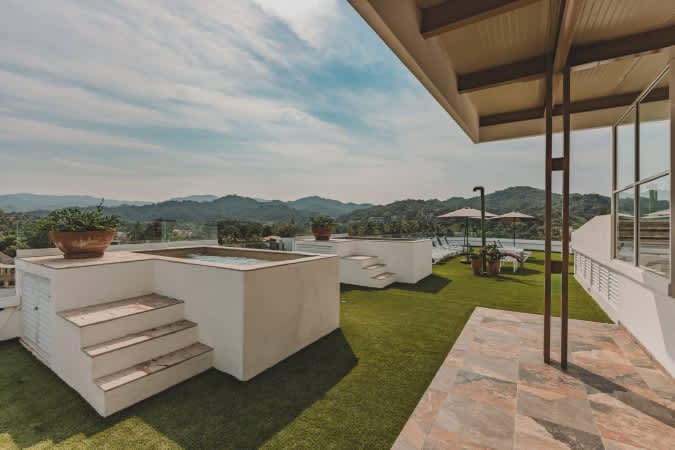
Vista Verde — 3 bedrooms, sleeps 6, rooftop pool, pet-friendly, one block from the beach and four blocks from the plaza. Our most-requested spot for guests bringing a small dog or hanging out on the rooftop during the warm holiday evenings.
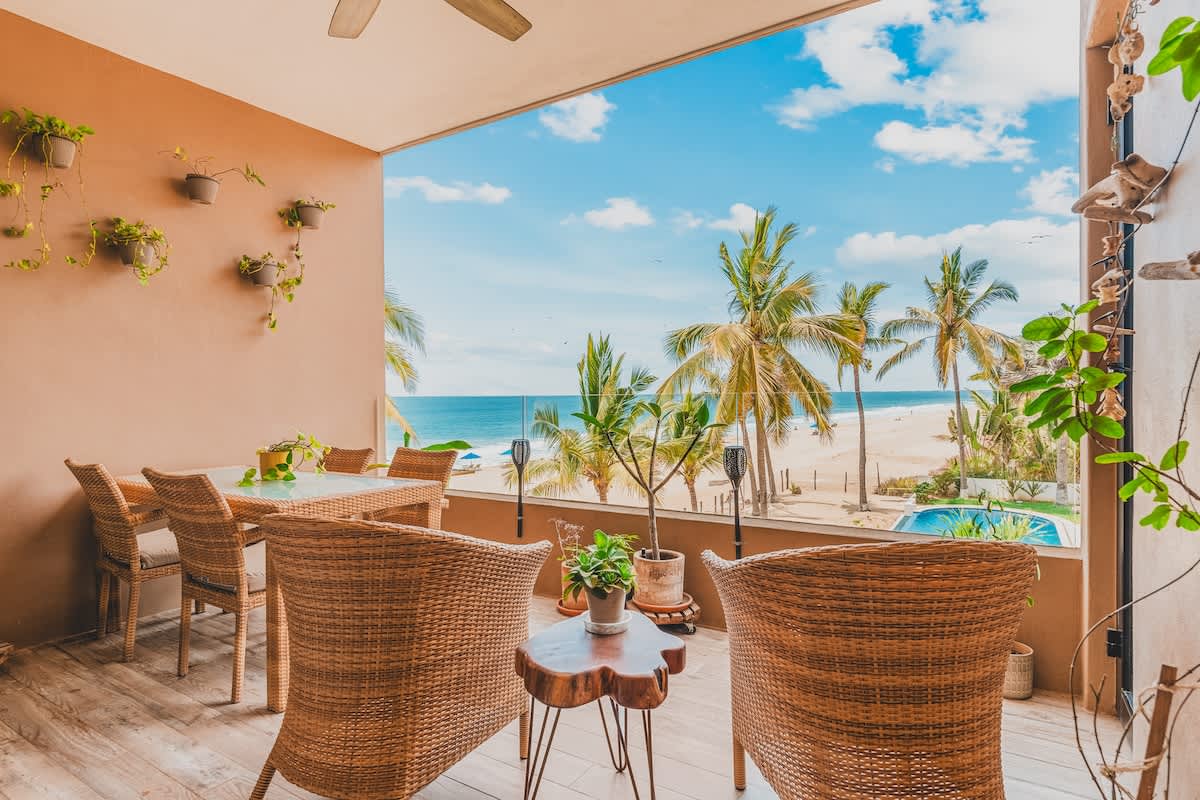
Casa De Vigil — 2 bedrooms, beachfront with ocean views and a pool. Quieter base, easy walk into town for the parade.
Cumbre Lofts — 4 bedrooms, 4 mini-kitchens, sleeps up to 12, private pool. Built for the kind of multi-generational group that wants to be in San Pancho for a Día de los Muertos trip together.
Casa Mezcalito — 4 bedrooms, sleeps 8, private heated pool, walking distance to the plaza. Good for a friend group.
Or browse our San Pancho rentals and our team will help match a property to your party and your dates. Book early — early November is high season here, and the holiday adds extra pull on the calendar.
Día de los Muertos in San Pancho is small, warm, and real. You'll come home with the smell of copal still in your clothes, a few photos you don't quite know how to caption, and a different feel for what it means to remember the people you've lost. Come early, stay through, and let the town show you how this is done. We'd love to have you with us for it.